History Of Monkey Temple
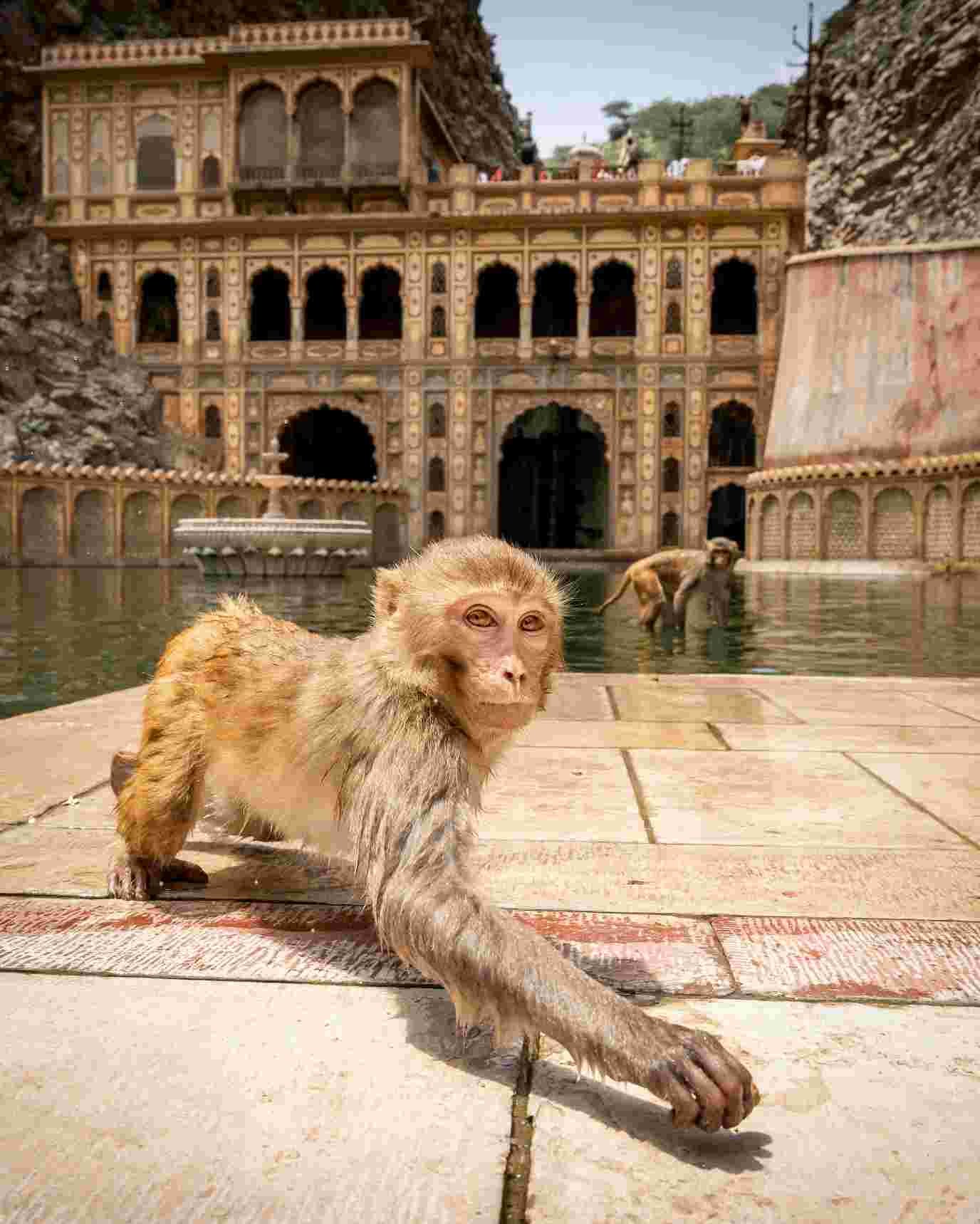
The Monkey Temple, popularly known as Galta Ji Temple, is one of the oldest and most sacred pilgrimage sites near Jaipur, Rajasthan. Its origins date back to ancient times and are closely associated with the sage Galav, who is believed to have meditated here for years. According to legends, he performed intense penance to please the gods, and as a blessing, a natural spring emerged in the hills, creating the holy water tanks (kunds) that still flow today.
The present temple complex was largely built in the 18th century by Diwan Rao Kriparam, a courtier of Maharaja Sawai Jai Singh II. Constructed in pink sandstone, the temple features beautiful pavilions, carved pillars, and sacred tanks surrounded by hills. Over time, it became home to a large population of monkeys, giving it the name “Monkey Temple” and attracting both pilgrims and tourists alike.
How old is the Monkey Temple, Jaipur?
The Galtaji Temple, also known as the “Monkey Temple”, was built around the 18th century by Diwan Rao Kriparam, a courtier to Maharaja Sawai Jai Singh II, to honour the ancient Hindu saint Galav.
Types of Monkeys in the Monkey Temple?
The small, brown, and common Rhesus Macaque (Macaca mulatta) and the larger, grey-furred, and less common Gray Langur (Semnopithecus)
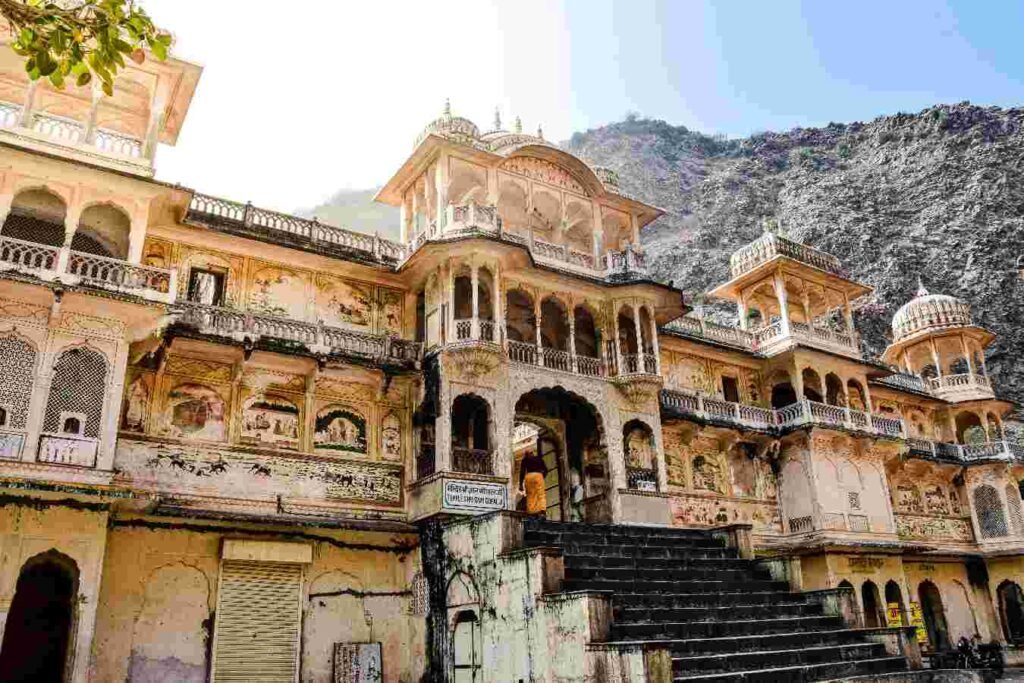
Monkey Temple Jaipur
Galtaji Temple, Jaipur: Entry Fee
- No entry fee
For more information about our Rajasthan tour package, please fill out the inquiry form.
If you want to know more about famous homestays in Jaipur, click here.